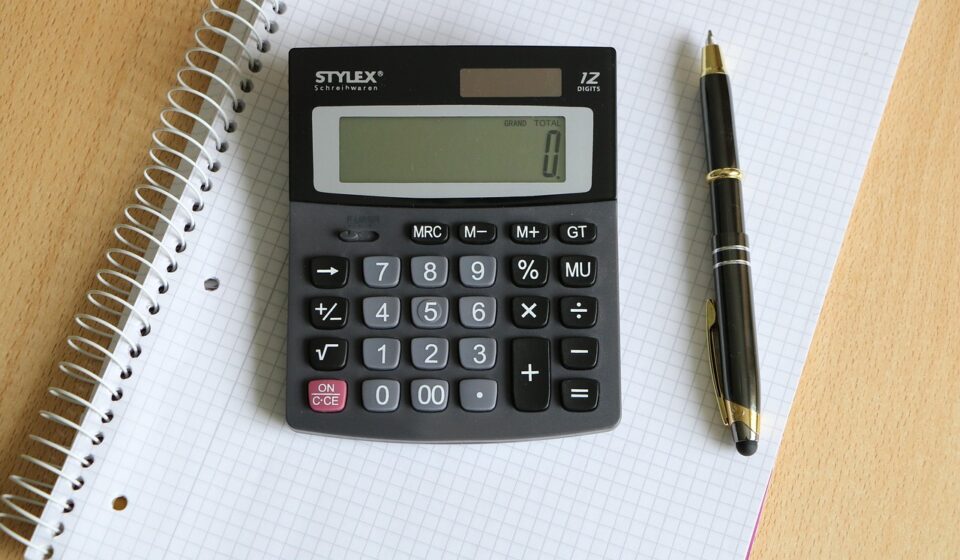
Figuring Out the Savings: Your 2026 Percent Off Calculator Guide
For anyone navigating the busy sales aisles of 2026, understanding how much you’re actually saving is key. A percent off calculator is your most straightforward tool to instantly determine the final price of an item after a discount is applied, helping you shop smarter and keep more money in your pocket.
Last updated: June 12, 2026
Imagine this: you spot a fantastic television advertised with a “25% off” sticker. Without a moment’s thought, you might grab it, assuming it’s a great deal. But what if the original price was inflated, or what if you could have found a better deal elsewhere with a slightly different discount? Knowing the exact dollar amount you’re saving, and therefore the true final price, empowers you to make informed purchasing decisions.
Key Takeaways
- A percent off calculator quickly shows you the discounted price and the exact amount saved.
- These tools are invaluable for understanding sales, coupons, and everyday discounts.
- Using a calculator prevents common errors in mental math for percentage calculations.
- Beyond simple discounts, understanding percentages helps in budgeting and financial planning.
- Always compare prices and consider factors like sales tax and shipping after the initial discount.
What Exactly Is a Percent Off Calculator?
At its core, a percent off calculator is a digital tool designed to simplify discount calculations. It takes an original price and a percentage discount as input, then outputs two crucial pieces of information: the discount amount (how much money you’re saving) and the final price (what you’ll actually pay).
Think of it as your personal financial assistant for shopping. Instead of fumbling with mental math, which can often lead to errors (especially when faced with tempting sales), you input the numbers and get an instant, accurate result. This is particularly useful during major shopping events like Black Friday or seasonal sales where discounts can be significant and varied.

How Does a Percent Off Calculator Work?
The magic behind a percent off calculator is simple mathematics. It uses a basic formula to determine the discount and the resulting price.
The formula to calculate the discount amount is:
Discount Amount = Original Price × (Percentage Off / 100)
Once you have the discount amount, you subtract it from the original price to find the final price:
Final Price = Original Price – Discount Amount
Many online calculators combine these steps. For example, to find 20% off $100:
- Discount Amount = $100 × (20 / 100) = $100 × 0.20 = $20
- Final Price = $100 – $20 = $80
So, 20% off $100 means you save $20 and pay $80. A percent off calculator automates this process, saving you time and ensuring accuracy.
Practical Tips for Using Your Percent Off Calculator
While using a percent off calculator is generally intuitive, a few tips can maximize its usefulness, especially as of June 2026, with online shopping becoming even more prevalent.
Always Verify the Original Price: Before applying a discount, do a quick check on the original price. Sometimes, retailers inflate the “original” price just before a sale to make the discount seem larger than it’s. If you can find a third-party price comparison, do so.
Factor in Additional Costs: The discount is applied to the item’s price, but don’t forget about sales tax, shipping fees, or any handling charges. These are typically added after the discount is calculated. For instance, a $100 item at 20% off becomes $80, but if there’s an 8% sales tax, the final total would be $80 + ($80 × 0.08) = $86.40.
Understand Coupon Stacking Rules: Some stores allow you to combine multiple discounts (e.g., a store-wide percentage off plus a specific product coupon). Others only permit one discount per purchase. Your percent off calculator can help you estimate savings for each scenario if you’re unsure.
Use It for More Than Just Sales: This tool isn’t just for big holiday sales. Use it to calculate discounts on everyday items, service fees, or even to understand salary increases or pay raises expressed as a percentage. According to the U.S. Bureau of Labor Statistics’ 2025 data, wage growth for many sectors hovered around 3-5%, so understanding what that means in real dollar terms can be insightful.
Common Mistakes When Calculating Percentages Off
Even with a calculator, people sometimes make mistakes, often due to misunderstanding the underlying concept or rushing the process.
Calculating the Discount Based on the Sale Price: A common error is taking the discount percentage and applying it to the sale price instead of the original price. For example, on a $100 item with 20% off, someone might mistakenly calculate 20% of $80 (the final price) instead of $100 (the original price).
Rounding Errors: While most digital calculators handle this, manual calculations can lead to rounding issues. For example, if a discount results in a price like $49.996, rounding it to $50.00 instead of $49.99 can represent a small but real loss in savings.
Confusing Percent Off with Percent More: Sometimes, people get confused when calculating a price increase after a discount. For example, if an item was $80 after a 20% discount, it doesn’t mean a 20% increase will bring it back to $100. To get back to $100 from $80, you’d need a 25% increase ($100 – $80 = $20, and $20 is 25% of $80).

Real-World Examples of Percent Off Savings
Let’s put the percent off calculator to work with some everyday scenarios.
Scenario 1: The New Laptop
You’re eyeing a new laptop originally priced at $1200. It’s advertised with a 15% discount. Using a percent off calculator:
- Original Price: $1200
- Percentage Off: 15%
- Discount Amount: $1200 × 0.15 = $180
- Final Price: $1200 – $180 = $1020
You save $180 on your purchase.
Scenario 2: Clothing Sale
A pair of jeans is marked down from $75 to $50. What’s the percentage off?
- Original Price: $75
- Final Price: $50
- Discount Amount: $75 – $50 = $25
- Percentage Off: ($25 / $75) × 100 = 33.33%
This is a 33.33% discount. Many online calculators can also work backward like this, helping you determine the actual discount percentage if you only know the original and sale prices.
Scenario 3: Online Coupon Code
You’re buying items totaling $200 online and have a 10% off coupon code. The website also offers free shipping on orders over $150.
- Original Total: $200
- Coupon Discount (10%): $200 × 0.10 = $20
- Price after coupon: $200 – $20 = $180
Since $180 is over $150, you also get free shipping. Your final out-of-pocket cost is $180, saving you $20 on the product price plus the shipping fee.
Beyond Sales: Percentages in Financial Planning
The utility of a percent off calculator extends beyond mere shopping discounts. Understanding percentages is fundamental to personal finance.
For example, when evaluating a loan, understanding interest rates (often expressed as a percentage) is crucial. A 5% interest rate on a $10,000 loan means you’ll pay $500 in interest for the first year. Conversely, when looking at investment returns, a 7% annual gain on $10,000 means your investment grows by $700.
As of 2026, financial literacy tools are more accessible than ever. Using a percent off calculator can build confidence with percentage concepts, which are then transferable to more complex financial calculations like compound interest, inflation rates, and tax implications. For a deeper dive into managing your finances, resources like the Consumer Financial Protection Bureau (CFPB) offer valuable guidance.
Frequently Asked Questions
What is the simplest way to calculate percent off?
The simplest way is to use an online percent off calculator. You enter the original price and the discount percentage, and it instantly provides the final price and the amount saved.
How do I calculate 20% off $50?
To calculate 20% off $50, first find 20% of $50, which is $10 ($50 x 0.20). Then, subtract this discount from the original price: $50 – $10 = $40. The final price is $40.
Can a percent off calculator help me calculate sales tax?
While a percent off calculator primarily calculates discounts, the same principle applies to sales tax. You can input the sale price as the “original price” and the sales tax rate (e.g., 7%) as the “percentage off” to find the tax amount, or adjust the formula to add it.
What if I only know the final price and the discount percentage?
If you know the final price and the discount percentage, you can work backward. For example, if an item cost $80 after a 20% discount, it means $80 represents 80% of the original price. To find the original price, divide $80 by 0.80, which equals $100.
Are there any downsides to using a percent off calculator?
The primary downside is over-reliance without understanding the concept. You might miss nuances like inflated original prices or additional fees, or fail to spot better deals if you don’t compare. The tool is an aid, not a replacement for critical thinking.
How much is 10 percent off $150?
Ten percent of $150 is $15 ($150 x 0.10). Subtracting this from the original price gives you $150 – $15 = $135. So, 10 percent off $150 is $135.
Your Smartest Shopping Starts Here
Mastering the use of a percent off calculator is a small step that can lead to significant savings. In 2026, where every dollar counts, tools that provide instant clarity on discounts are invaluable. Whether you’re hunting for bargains on Black Friday or simply making a routine purchase, knowing exactly what you’re paying makes all the difference.
Actionable Takeaway: Make it a habit to use a percent off calculator for any purchase involving a discount. Bookmark your favorite online tool or keep a simple version handy on your phone to ensure you’re always getting the best possible deal.
Last reviewed: June 2026. Information current as of publication; pricing and product details may change.
Editorial Note: This article was researched and written by the Novel Tech Services editorial team. We fact-check our content and update it regularly. For questions or corrections, contact us.