Why Accurate Square Footage Matters in 2026
For anyone planning a home renovation, buying or selling property, or even just trying to figure out how much paint you need, knowing how to calculate square footage accurately is essential. It’s more than just a number; it’s a fundamental metric that influences everything from property value and tax assessments to material purchasing and interior design. As of June 2026, this skill remains crucial for homeowners and DIY enthusiasts alike.
Last updated: June 12, 2026
Think of it this way: underestimating your square footage for flooring could leave you with a half-finished project and a trip back to the store. Overestimating might mean buying far more materials than you need, leading to wasted money. This guide breaks down the seemingly simple, yet often overlooked, process of calculating square footage for any space.
Key Takeaways
- Square footage is calculated by multiplying length by width for rectangular areas.
- Complex shapes can be broken down into simpler geometric forms for calculation.
- Accurate measurements prevent costly overspending on materials and ensure project success.
- Understanding unit conversions (e.g., feet to inches) is vital for precise calculations.
- Square footage is a key factor in real estate valuation and renovation planning.
The Basics: Calculating Rectangular Areas
At its core, calculating square footage is about finding the area of a space. For a simple rectangle or square, the formula is straightforward: Area = Length × Width.
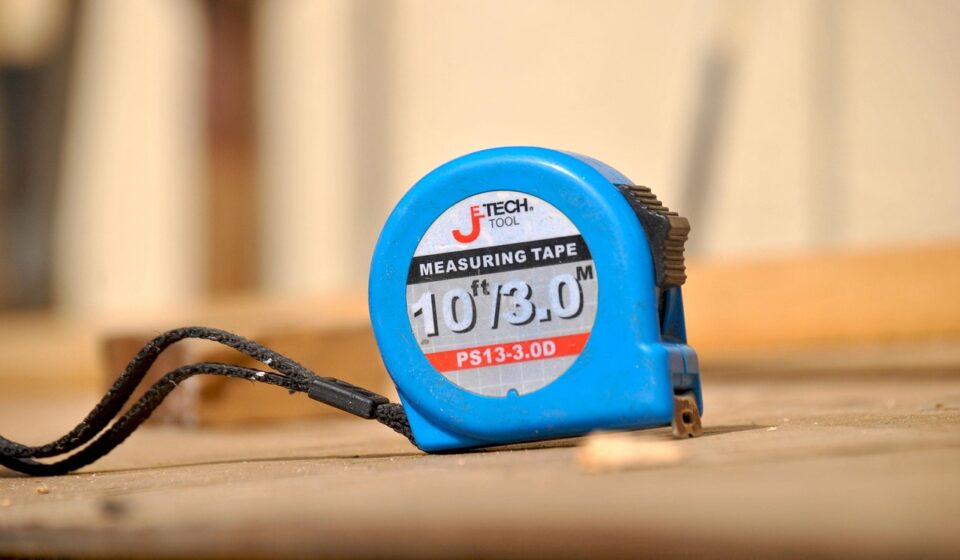
Let’s say you’re measuring a rectangular room. You’ll need a reliable measuring tape. Measure the length of one side and the width of an adjacent side. Ensure you’re measuring along the longest wall for length and the longest adjacent wall for width. For example, if a room is 12 feet long and 10 feet wide, its square footage is 12 ft × 10 ft = 120 sq ft.
Practically speaking, using a laser distance measurer can offer greater accuracy, especially for larger spaces or when working alone. Always double-check your measurements; a small error here can compound significantly when calculating for an entire house or large project.
Handling Irregular Shapes and Complex Rooms
Most homes aren’t perfect boxes. L-shaped rooms, spaces with alcoves, or areas with angled walls require a slightly more strategic approach. The key is to break down complex shapes into simpler geometric figures like rectangles, squares, triangles, and even circles.
For an L-shaped room, you can divide it into two rectangles. Measure the dimensions of each rectangle separately and calculate their individual square footages. Then, simply add these areas together to get the total square footage of the L-shaped space. For instance, if you divide an L-shape into a 10×10 ft section and an 8×6 ft section, the total is (100 sq ft) + (48 sq ft) = 148 sq ft.
If you have a triangular area, such as a bay window nook, use the formula for the area of a triangle: Area = 0.5 × Base × Height. Ensure the ‘height’ is the perpendicular distance from the base to the opposite vertex.
Calculating Square Footage for Walls and Ceilings
While most often we think of floor space, square footage also applies to walls and ceilings, especially for projects like painting or wallpapering. For walls, you’ll calculate the area of each wall panel and sum them up. If you’re painting, remember to subtract the area of any windows or doors.
The calculation for a wall is essentially the same as a floor: its length multiplied by its height. If a room is 12 feet long and 10 feet wide with 8-foot ceilings, the two longer walls are each 12 ft × 8 ft = 96 sq ft, and the two shorter walls are each 10 ft × 8 ft = 80 sq ft. The total wall area would be (96 × 2) + (80 × 2) = 192 + 160 = 352 sq ft. You’d then subtract areas for windows and doors.
Ceilings are typically straightforward rectangles, so you use the same length × width calculation as for floors. However, for sloped ceilings or vaulted spaces, you might need to break them down into triangular or trapezoidal sections for a more accurate measurement.
Understanding Area Conversions and Units
It’s crucial to be consistent with your units. If you measure in feet, your result will be in square feet. However, sometimes you might need to convert to square yards or square meters. There are 3 feet in 1 yard, so there are 3 ft × 3 ft = 9 square feet in 1 square yard. To convert square feet to square yards, divide by 9.
Conversions are common when dealing with material packaging or different regional standards. For example, some flooring is sold by the square yard. If your room is 150 sq ft, that’s 150 / 9 = 16.67 square yards. This is where using a calculator or a quick reference table becomes handy.
What this means in practice: always note your units as you measure. If you measure one dimension in feet and another in inches, you’ll need to convert one before multiplying. A common mistake is measuring a room as 12 ft by 144 inches. You must convert the inches to feet (144 inches / 12 inches/foot = 12 feet) before calculating: 12 ft × 12 ft = 144 sq ft. Alternatively, convert feet to inches: 12 ft × 12 inches/ft = 144 inches, then calculate 144 inches × 144 inches = 20,736 square inches. Then convert square inches to square feet: 20,736 sq in / 144 sq in/sq ft = 144 sq ft.

Practical Application: Material Estimation and Costs
The most common reason people need to calculate square footage is for purchasing materials like flooring, paint, carpet, or tiles. Builders and contractors rely on this metric for accurate quotes and material orders. As of 2026, accurately estimating material needs can save significant money.
A good rule of thumb, especially for flooring or tile, is to add a surplus of 10-15% to your calculated square footage. This accounts for cuts, waste, mistake, and future repairs. For example, if your room is 120 sq ft, you might buy 132 sq ft (120 + 10%) or 138 sq ft (120 + 15%). This buffer is a practical insight that experienced professionals always use.
From a different angle, when considering the cost of a project, knowing the square footage allows you to compare prices effectively. For instance, if you’re looking at different types of carpet, you can compare prices per square foot or square yard. According to a recent industry survey as of June 2026, the average cost for installed carpet ranges from $2 to $8 per square foot, depending on material quality and installation complexity. For our 120 sq ft room, the carpet cost alone could range from $240 to $960, before accounting for the surplus.
A Contrarian Take: Beyond the Simple Calculation
Many guides focus solely on the geometry, but what if the calculation itself is just one part of the puzzle? While precise measurement is vital, the true value lies in how you use that number. For example, some real estate listings might include ‘gross living area’ which can sometimes include non-conditioned spaces like garages or unfinished basements, while others only count ‘net heated square footage’. It’s important to understand what the square footage figure represents in its context.
What this means in practice: always clarify what’s included in a square footage measurement, especially when dealing with property listings or official assessments. A common mistake is assuming all listed square footage counts towards habitable living space. This distinction can significantly impact property valuation and renovation planning.
And, for very large or complex projects, relying solely on your own calculations might not be enough. Professional surveyors or experienced contractors often use specialized tools and techniques, and their input can save you from costly errors. While you can certainly calculate square footage yourself for most DIY needs, recognizing when to call in an expert is a sign of practical wisdom.
Tools and Tips for Accurate Measurement
Using the right tools makes a significant difference. A standard metal tape measure is good for most rooms. For very large spaces or to ensure maximum accuracy, a laser distance measurer is a worthwhile investment. These devices project a laser beam to measure distances quickly and precisely, often with built-in functions for area calculation.
Here are some practical tips:
- Measure twice, cut once: This old adage is critical for square footage. Double-check every measurement.
- Use consistent units: Stick to feet (or inches, or meters) throughout your entire calculation for a single space.
- Account for baseboards: Measure to the wall itself, not the outside edge of the baseboard, for floor area. For wall area calculations, decide if you’re measuring from the floor to the ceiling or to the top of trim.
- Break it down: Don’t shy away from dividing complex shapes into smaller, manageable geometric figures.
- Sketch it out: Draw a rough diagram of the space and label your measurements. This visual aid helps prevent errors and keeps your calculations organized.
From a different angle, consider the purpose of your measurement. If it’s for buying flooring, you’ll need to be meticulous. If it’s for a rough estimate of how much furniture might fit, a slightly less precise measurement might suffice. However, for any project with a budget or material requirement, precision is paramount.
Frequently Asked Questions About Square Footage
What is the formula for calculating square footage?
The most basic formula for calculating square footage is Length × Width. For more complex shapes, you’ll break the area into simpler geometric forms (rectangles, triangles) and sum their individual areas.
How do I calculate the square footage of an L-shaped room?
Divide the L-shaped room into two distinct rectangular sections. Measure the length and width of each section, calculate their individual square footages, and then add the two results together to get the total area.
Do I need to add extra for waste when calculating square footage for materials?
Yes, it’s highly recommended to add 10-15% extra square footage to account for cuts, waste, and potential mistakes. This buffer ensures you have enough material for the entire project.
What’s included in a home’s square footage for real estate purposes?
Typically, a home’s ‘gross living area’ includes all finished, heated, and above-grade spaces. Unfinished basements, garages, and outdoor areas are usually excluded from this figure, though definitions can vary slightly by region or appraiser.
Can I calculate square footage using inches?
Yes, but you must be consistent. If you measure in inches, calculate the total square inches and then divide by 144 (since there are 12 inches in a foot, and 12×12=144 square inches in a square foot) to convert to square footage.
How do I calculate the square footage of a circular area?
Use the formula for the area of a circle: Area = π × radius². Measure the radius (distance from the center to the edge) and square it, then multiply by Pi (approximately 3.14159).
Conclusion: Mastering Your Measurements
Learning how to calculate square footage accurately is a fundamental skill for anyone involved in home improvement, real estate, or even just managing their living space. While the basic formulas are simple, the key lies in careful measurement, understanding different shapes, and being mindful of units and waste. By following these steps and using the right tools, you can confidently tackle any measurement challenge, ensuring your projects are well-planned and cost-effective.
Last reviewed: June 2026. Information current as of publication; pricing and product details may change.
Related read: Figure Concrete for Slab: Your 2026 Estimator Guide
Source: Britannica
Editorial Note: This article was researched and written by the Novel Tech Services editorial team. We fact-check our content and update it regularly. For questions or corrections, contact us. For readers asking “How to calculate square footage”, the answer comes down to the specific factors covered above.