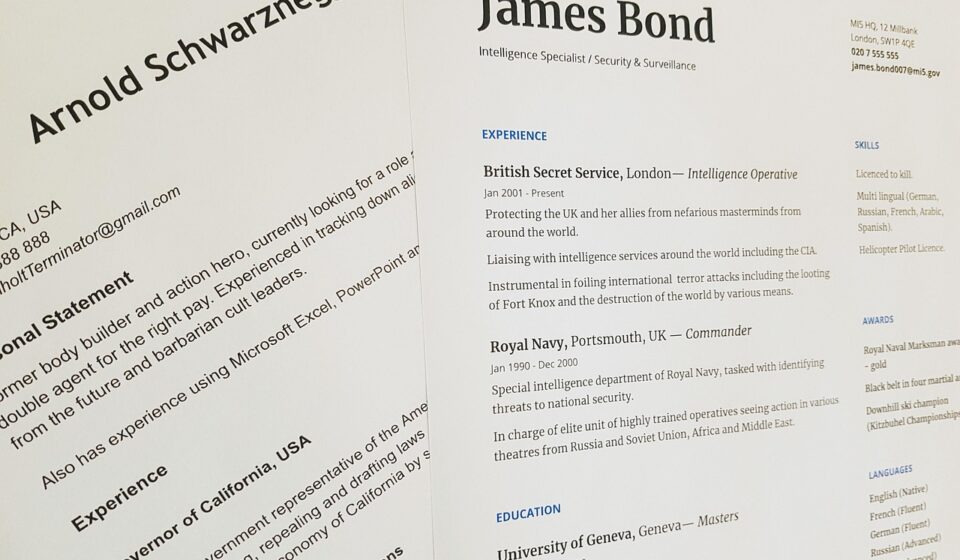
Why Use ChatGPT for Resume Writing in 2026?
As of May 2026, the job market is more competitive than ever. Crafting a compelling resume that stands out requires precision, strategic keyword placement, and a clear articulation of your value. This is precisely where tools like ChatGPT can become invaluable allies.
Last updated: May 29, 2026
For anyone working through the question of how to use ChatGPT for resume writing, the answer is simple: it’s a powerful co-pilot that can significantly simplify and enhance the process, provided you know how to guide it effectively.
Key Takeaways
- ChatGPT can generate resume content, tailor it to job descriptions, and suggest improvements.
- Effective use relies on detailed prompts and human review for accuracy and tone.
- Avoid generic outputs by providing specific context about your experience and target roles.
- Key areas AI can assist include drafting summaries, bullet points, and identifying relevant skills.
- Human oversight is critical to ensure authenticity and avoid errors that AI might miss.
Understanding ChatGPT’s Role: Your AI Resume Assistant
Think of ChatGPT not as a replacement for your own expertise, but as an intelligent assistant. Its primary function is to process vast amounts of text and generate human-like responses based on the instructions you provide. When it comes to resume writing, this means it can help overcome writer’s block, suggest phrasing, and even adapt your existing content.
Practically speaking, when you ask ChatGPT to write a resume section, it draws upon its training data to produce text that aligns with common professional formats and language. The key is to understand its strengths and limitations to harness its full potential.
What this means in practice is that it can draft your professional summary, help you brainstorm action verbs for your experience bullet points, and even suggest keywords that Applicant Tracking Systems (ATS) might be looking for.
The Art of Prompt Engineering for Resumes
The effectiveness of ChatGPT hinges entirely on the quality of your prompts. Vague instructions yield generic results, while detailed, specific prompts unlock its true power. This is where prompt engineering comes into play.
When asking ChatGPT to write your resume, provide it with as much context as possible. This includes your target job title, the industry, key responsibilities of the role, and your specific achievements.
For instance, instead of asking “Write a resume for me,” try a prompt like: “Act as a professional resume writer. I am applying for a Senior Marketing Manager position at a SaaS company. My goal is to highlight my experience in digital campaign management, lead generation, and team leadership. Here are my key achievements: [List 3-4 specific achievements with metrics]. Please draft a professional summary and 3-4 bullet points for my experience section.”
According to Forbes Advisor (2024), the most effective resumes are tailored to the specific job. ChatGPT excels when given this specific targeting information.
Drafting a Professional Summary with AI
Your professional summary is your resume’s elevator pitch. ChatGPT can help generate several options based on your career history and the job you’re applying for.
Provide ChatGPT with your job titles, years of experience, core skills, and the job description. Ask it to generate 2-3 summary options, each focusing on different aspects of your profile or using different tones.
Example Prompt: “Generate three professional summary options for a ‘Data Analyst’ role. I have 5 years of experience in data visualization, SQL, and Python, with a proven track record of improving reporting efficiency by 20%. The target job emphasizes dashboard creation and stakeholder communication.”
Limitation: While ChatGPT can draft compelling summaries, it might not capture your unique professional voice without refinement. Always review and edit for authenticity.
Enhancing Experience Bullet Points
This is where AI can truly shine. Bullet points detailing your responsibilities and achievements are critical. ChatGPT can help transform passive descriptions into powerful, action-oriented statements.
Provide your raw responsibilities or achievements and ask ChatGPT to rephrase them using strong action verbs and quantifiable results. You can also ask it to incorporate keywords relevant to the job description.
Example Prompt: “Rewrite these bullet points for a ‘Project Manager’ role using the STAR method (Situation, Task, Action, Result) and strong action verbs: ‘Managed project timelines and budgets. Communicated with team members. Completed projects.’ The target role requires experience in Agile methodologies and cross-functional team leadership.”
ChatGPT might suggest: “Spearheaded cross-functional Agile teams of 8-10 members to deliver complex software projects, consistently meeting deadlines and managing budgets up to $500,000. Improved project completion rates by 15% through enhanced communication and risk mitigation strategies.”
Tailoring Your Resume with ChatGPT
A one-size-fits-all resume rarely works. Tailoring your resume to match the specific requirements of each job application is crucial for increasing your chances of an interview. ChatGPT is an exceptional tool for this task.
You can provide ChatGPT with your master resume and the specific job description. Then, ask it to identify key skills and responsibilities from the job description and suggest how to best integrate them into your resume, focusing on the most relevant experiences.
Example Prompt: “Here is my resume [Paste Resume] and a job description for a ‘Digital Marketing Specialist’ [Paste Job Description]. Please identify the top 5 skills and responsibilities mentioned in the job description and suggest how I can best tailor my resume to highlight my experience in those areas, particularly focusing on SEO and content marketing.”
This process helps ensure your resume speaks directly to the employer’s needs, making it more likely to pass ATS screening and catch the eye of a recruiter.
Optimizing for Applicant Tracking Systems (ATS)
Many companies use Applicant Tracking Systems (ATS) to filter resumes before they even reach human eyes. These systems scan for specific keywords and phrases that match the job description. How can ChatGPT help here?
By analyzing the job description, ChatGPT can identify crucial keywords related to skills, experience, and qualifications. You can then instruct it to strategically weave these keywords into your resume’s summary, experience, and skills sections without sounding unnatural.
Example Prompt: “Analyze this job description [Paste Job Description] for a ‘Software Engineer’ role. Identify the most critical technical keywords and soft skills. Then, suggest how to incorporate these keywords naturally into my existing resume [Paste Resume], particularly in the skills and experience sections.”
According to ZipRecruiter, resumes that are ATS-friendly have a much higher chance of being selected. ChatGPT can be a powerful ally in achieving this optimization.
Drawback: Over-reliance on keyword stuffing can make your resume sound robotic and may be penalized by more advanced ATS. Human review is essential to ensure readability and natural language flow.
Brainstorming and Refining Skill Sections
Your skills section is a quick snapshot of your capabilities. ChatGPT can help you create a complete and well-organized list of relevant skills, categorized for clarity.
Provide it with your job history and the target job description. Ask it to suggest a skills section that includes both hard skills (technical abilities) and soft skills (interpersonal traits).
Example Prompt: “Based on my experience as a ‘UX Designer’ and the requirements of this job description [Paste Job Description], suggest a complete skills section. Include technical skills like Figma, Adobe Creative Suite, user research, and prototyping, as well as soft skills like communication, problem-solving, and collaboration.”
You can also ask ChatGPT to group skills logically, such as technical skills, software proficiency, and interpersonal skills, making it easier for recruiters to scan.

Crafting Cover Letters and Other Career Documents
While the focus is on resumes, ChatGPT’s utility extends to other crucial job application documents, most notably cover letters. A well-written cover letter complements your resume by adding personality and context.
You can use ChatGPT to draft an initial cover letter, tailoring it to the specific job and company. Provide the job description, company information, and key points you want to convey from your resume.
Example Prompt: “Write a cover letter for the ‘Senior Marketing Manager’ position at [Company Name]. I am particularly excited about their recent campaign for [Product Name]. Please highlight my experience in digital strategy and team leadership, referencing my resume details [Briefly mention 1-2 key resume points].”
Beyond cover letters, ChatGPT can assist with LinkedIn profile summaries, thank-you notes, and even practice interview responses, making it a complete career tool.
Common Mistakes When Using ChatGPT for Resumes
Despite its power, using ChatGPT for resume writing is not without its pitfalls. Many users make critical errors that can undermine their efforts.
Blindly Copy-Pasting
The most significant mistake is taking ChatGPT’s output verbatim without review. AI-generated text can sometimes be generic, contain factual errors, or lack the personal touch that makes a resume authentic.
Solution: Always treat ChatGPT’s output as a draft. Edit thoroughly, fact-check all claims, and inject your own voice and specific examples. Ensure the tone aligns with your professional persona.
Lack of Specific Context
Generic prompts lead to generic answers. If you don’t provide enough detail about your experience, the role, or the company, the AI can’t generate tailored content.
Solution: Be as detailed as possible in your prompts. Include specific achievements, metrics, job responsibilities, and company information. The more context you give, the better the output.
Ignoring ATS and Readability
While ChatGPT can help with keywords, it might not always produce perfectly ATS-optimized or easily readable content. Over-stuffing keywords or creating overly complex sentences can be detrimental.
Solution: After generating content, review it for both ATS compatibility and human readability. Use tools to check keyword density and ensure sentences are clear and concise. Remove jargon where appropriate, unless it’s industry-standard and present in the job description.
Plagiarism and Originality Concerns
While ChatGPT generates original text, it draws from a vast dataset. There’s a small risk of generating content that’s too similar to existing material, especially for common phrases or industry clichés.
Solution: Use plagiarism checkers if you have concerns. More importantly, ensure you are editing and refining the AI’s output significantly. Your unique experiences and phrasing should be dominant.
Best Practices for Effective AI Resume Writing
To maximize the benefits of ChatGPT for your resume, adhere to these best practices. They ensure you get high-quality, tailored content that genuinely represents your professional profile.
Start with Your Master Resume
Before you even prompt ChatGPT, have a complete master resume ready. This document should contain all your work experience, education, skills, projects, and achievements. It serves as the primary source of information for the AI.
Having this consolidated document makes it easier to copy and paste relevant sections into your prompts, ensuring ChatGPT has access to all necessary details.
Use Specific Job Descriptions
When tailoring your resume, always use the exact job description for the role you are applying for. How to use chatgpt for resume writing allows ChatGPT to identify the precise keywords, skills, and qualifications the employer is seeking.
Compare your master resume to the job description and ask ChatGPT to identify gaps or areas that need emphasis. This targeted approach is far more effective than generic requests.
Iterate and Refine
Don’t expect perfection on the first try. Use ChatGPT iteratively. If the first output isn’t quite right, provide feedback. Ask it to be more concise, more detailed, use different phrasing, or focus on a particular skill.
For example, you can say: “Make this summary more concise and focus on my leadership experience,” or “Rewrite these bullet points to highlight quantifiable achievements.” This back-and-forth refinement process is key.
Verify and Personalize
This is non-negotiable. Every piece of information generated by ChatGPT must be verified for accuracy. Ensure dates, titles, company names, and especially achievements are correct.
More importantly, infuse your personality and professional voice. Add specific anecdotes or insights that only you can provide. This human element is what truly sets a resume apart.
According to a report from SHRM (Society for Human Resource Management) (2023), responsible AI use in hiring involves human oversight for accuracy and ethical considerations.
What ChatGPT Can and can’t Do for Your Resume
To set realistic expectations, it’s important to understand the boundaries of AI assistance in resume writing.
What ChatGPT Can Do:
- Generate draft content for summaries, experience, education, and skills sections.
- Suggest action verbs and improve sentence structure for bullet points.
- Identify keywords relevant to a specific job description for ATS optimization.
- Help tailor existing content to match job requirements.
- Rephrase passive statements into active, impactful ones.
- Brainstorm ideas for different resume sections.
- Assist in writing cover letters and other career documents.
What ChatGPT can’t Do:
- Understand your unique career nuances or personal professional voice without explicit direction.
- Verify the factual accuracy of your career history (it relies on what you provide).
- Guarantee an interview or a job offer – it’s a tool, not a magic wand.
- Replace your critical thinking, strategic decision-making, or personal storytelling.
- Ensure 100% ATS compatibility without human review, as ATS systems evolve.
- Guarantee originality; its output is derivative of its training data.
Ultimately, ChatGPT is a powerful tool to augment your resume writing efforts, not replace them. The human element of review, personalization, and strategic direction remains paramount.
Real-World Examples: ChatGPT in Action
Let’s look at a practical scenario. Sarah, a mid-career marketing professional, was applying for a new role. She had a solid resume but felt it was too generic.
Scenario 1: Crafting a Stronger Professional Summary
Sarah’s original summary read: “Experienced marketing professional with skills in digital marketing and campaign management.” She gave ChatGPT her resume and the target job description for a “Digital Marketing Manager.” She prompted:
“Draft a professional summary for a Digital Marketing Manager role. I have 7 years of experience in SEO, SEM, content marketing, and social media strategy. Key achievements include increasing website traffic by 40% and leading a team that improved lead conversion by 25%. The target role emphasizes data-driven campaign optimization and B2B marketing.”
ChatGPT generated:
“Data-driven Digital Marketing Manager with 7 years of experience spearheading successful B2B marketing strategies. Proven ability to increase website traffic by 40% and enhance lead conversion rates by 25% through expert application of SEO, SEM, content marketing, and social media initiatives. Adept at campaign optimization and leading high-performing teams to achieve aggressive growth targets.”
Sarah then edited this to add specific company names and a unique professional insight, making it her own.
Scenario 2: Quantifying Experience Bullet Points
Sarah’s old resume had a bullet point: “Managed social media accounts.” Using ChatGPT, she input:
“Rewrite this bullet point for a social media manager role: ‘Managed social media accounts.’ Focus on growth, engagement, and ROI. I increased follower count by 30% and engagement by 50% on key platforms.”
ChatGPT suggested:
“Grew social media presence by 30% across key platforms (e.g., LinkedIn, Instagram) and increased user engagement by 50% through strategic content planning and community management, directly contributing to enhanced brand visibility and customer interaction.”
This transformation from a passive statement to an achievement-driven bullet point is a testament to ChatGPT’s utility. The crucial step was Sarah’s verification and slight personalization of the AI’s output.
Frequently Asked Questions
Is it safe to use ChatGPT for my resume?
Yes, it’s generally safe to use ChatGPT for resume writing as a tool for drafting and refinement. However, it’s crucial to review, edit, and personalize all AI-generated content to ensure accuracy, authenticity, and to avoid generic outputs.
What are the best prompts for ChatGPT resume writing?
The best prompts are specific and provide context. Include your target job title, industry, key responsibilities, your specific achievements (with metrics if possible), and the job description you are applying for. Specify the desired output, such as a professional summary or experience bullet points.
Can ChatGPT write a resume that passes ATS?
ChatGPT can help identify and incorporate keywords from a job description to make your resume more ATS-friendly. However, human review is essential to ensure the content flows naturally, avoids keyword stuffing, and meets the specific criteria of evolving ATS algorithms.
How do I make my AI-generated resume sound human?
Inject your personal voice, experiences, and specific anecdotes. Edit the AI’s output extensively, replace generic phrasing with your own words, and ensure the tone reflects your professional personality. Always fact-check and verify all information.
What are the limitations of using AI for resume writing?
AI tools like ChatGPT can’t fully replicate human judgment, personal voice, or in-depth understanding of your unique career path. They may produce generic content, factual errors, or miss nuances that a human writer would capture. Critical human oversight is always required.
Can I use ChatGPT for a resume with no experience?
Yes, ChatGPT can help you craft a resume even with limited or no professional experience. You can ask it to focus on academic achievements, volunteer work, transferable skills, projects, and career objectives, helping to structure these effectively for entry-level roles.
Conclusion: Your AI-Powered Resume Strategy
As of May 2026, using AI tools like ChatGPT for resume writing is not just a trend, but a strategic advantage. By understanding how to craft effective prompts, tailor content for specific roles, and optimize for ATS, you can create a more compelling and competitive resume.
Remember, the goal is not to have ChatGPT write your resume for you, but to have it write with you. The most effective approach combines the AI’s speed and data processing capabilities with your unique experience, insights, and professional voice. Always review, refine, and verify its output.
Actionable Takeaway: Experiment with ChatGPT today by taking one job description and your master resume. Ask it to generate three tailored bullet points for a specific role, then edit them to perfection.
Last reviewed: May 2026. Information current as of publication; pricing and product details may change. For readers asking “How to use chatgpt for resume writing”, the answer comes down to the specific factors covered above.