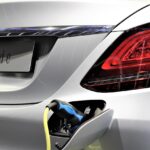

The Electric Heartbeat: Understanding Your Car on Battery in 2026
This guide covers everything about Car on Battery: Your 2026 Guide to Electric Vehicle Power. For anyone considering the shift to electric mobility, understanding the core of an electric vehicle (EV) – its battery – is paramount. As of May 2026, the technology behind the car on battery has advanced significantly, offering greater range, faster charging, and improved longevity. This guide demystifies EV battery systems, exploring their function, types, maintenance, and the exciting innovations shaping their future.
Key Takeaways
- EV batteries store energy to power the vehicle, and their capacity directly impacts range.
- Lithium-ion is the dominant battery chemistry, balancing energy density, cost, and lifespan.
- Fast charging offers convenience but can impact long-term battery health if overused.
- Battery degradation is a natural process, but proper care can extend its usable life.
- Future battery tech promises faster charging, higher energy density, and improved sustainability.
How Your Car on Battery Powers the Drive
At its simplest, a car on battery functions as the fuel tank and engine of an electric vehicle. The battery pack, a large assembly of individual cells, stores direct current (DC) electrical energy. When the driver presses the accelerator, the battery releases this energy to an electric motor, which then drives the wheels. This process is remarkably efficient, with electric motors converting a much higher percentage of energy into motion compared to internal combustion engines.
This stored energy dictates the vehicle’s range. A larger battery capacity, measured in kilowatt-hours (kWh), generally translates to a longer driving range on a single charge. Think of it like the size of a gasoline tank – a bigger tank allows for more miles before refueling. Today, as of May 2026, typical EV battery capacities range from around 40 kWh for smaller city cars to over 100 kWh for premium long-range models.
The Chemistry of Power: Dominant EV Battery Types
While various battery chemistries exist, the landscape for electric cars is overwhelmingly dominated by lithium-ion (Li-ion) technology. This is due to its superior energy density, allowing more energy to be stored in a smaller, lighter package. Li-ion batteries offer a good balance of performance, cost, and cycle life, making them the industry standard.
Within the Li-ion family, several specific chemistries are used, each with trade-offs. Lithium-nickel-manganese-cobalt oxide (NMC) is widely adopted for its high energy density and good power output. Lithium-iron-phosphate (LFP) batteries, while typically offering lower energy density, are known for their enhanced safety, longer lifespan, and lower cost, as they avoid cobalt. As of 2026, LFP batteries are gaining significant traction, especially in more affordable EV models and stationary energy storage, due to their durability and ethical sourcing advantages.
Other chemistries, like lithium-nickel-cobalt-aluminum oxide (NCA), are also used by some manufacturers, offering high energy density. The ongoing research aims to improve these chemistries further, reduce reliance on rare earth minerals, and enhance recyclability.
Recharging Your Electric Car Battery
The process of recharging an EV battery is a key consideration for any potential owner. Charging speeds and methods vary significantly. Level 1 charging uses a standard household outlet (120V in North America, 230V elsewhere) and is the slowest, suitable for overnight top-ups for shorter commutes. A typical Level 1 charger might add only 3-5 miles of range per hour.
Level 2 charging, using a dedicated 240V home charger or public charging stations, is much faster, adding 20-60 miles of range per hour, depending on the charger’s power output and the car’s onboard charger capacity. This is the most common method for home charging and public destination charging. According to the U.S. Department of Energy, as of May 2026, over 100,000 public Level 2 charging ports are available across the United States.
DC Fast Charging (Level 3) is the quickest option, found at dedicated public charging hubs. These chargers can add 100-300 miles of range in as little as 15-30 minutes for compatible vehicles. However, the frequency and intensity of DC fast charging can, over time, contribute to battery degradation more than slower charging methods. The trend in 2026 is towards higher-power DC fast chargers (350 kW and above) becoming more common, enabling ultra-fast charging capabilities that rival refueling times for gasoline cars.
Understanding EV Battery Lifespan and Degradation
A common concern is how long an electric car battery will last. Battery degradation is a natural process where a battery’s capacity to hold a charge gradually decreases over time and with use. Factors influencing this include the number of charge/discharge cycles, depth of discharge, charging habits, and exposure to extreme temperatures. However, modern EV batteries are designed for longevity.
Most EV manufacturers offer battery warranties, typically for 8 years or 100,000 miles, guaranteeing a minimum battery capacity (often 70% of the original). Real-world data suggests that many EV batteries far exceed these warranty periods. For instance, a study by Geotab in late 2025 indicated that the average EV battery retains over 90% of its capacity after 100,000 miles, with many models performing even better.
Practically speaking, while some degradation is inevitable, it’s often not a concern for the average owner within the typical ownership period of a vehicle. The residual value of an EV is also closely tied to its battery health. Many battery packs can be repurposed for stationary energy storage after their automotive life, contributing to sustainability.
Maintaining Your Car on Battery for Optimal Performance
While EVs require less maintenance than their gasoline counterparts, proper battery care can significantly extend its lifespan and performance. One of the most crucial aspects is managing temperature. Extreme heat can accelerate battery degradation, while extreme cold can temporarily reduce range and charging speed. Parking in a garage or using preconditioning features (heating or cooling the cabin and battery while plugged in) can mitigate these effects.
Regarding charging, avoiding consistently charging to 100% or draining the battery to 0% can be beneficial for long-term health. Many experts recommend keeping the charge level between 20% and 80% for daily use, utilizing the full capacity only when long trips require it. This practice reduces stress on the battery cells. For vehicles that support it, choosing slower Level 2 charging over frequent DC fast charging for daily use is also advisable.
Manufacturers’ battery management systems (BMS) play a vital role in protecting the battery. These sophisticated systems monitor temperature, voltage, and current, balancing the charge across individual cells and preventing overcharging or deep discharge. Staying updated with vehicle software updates is also important, as these can often include optimizations for battery performance and management.
The Cost of Power: EV Battery Pricing and Replacement
The cost of EV battery packs has been a significant factor in the overall price of electric vehicles. However, prices have been steadily decreasing thanks to manufacturing economies of scale and advancements in battery chemistry and production. As of May 2026, the average cost of an EV battery pack is around $150 per kWh, down from over $1,000 per kWh a decade ago. This translates to a substantial portion of an EV’s manufacturing cost, but it’s becoming more affordable.
Replacing an EV battery pack outside of warranty can still be a considerable expense, often ranging from $5,000 to $15,000 or more, depending on the vehicle model and battery size. However, the need for such replacements is becoming less frequent due to improved battery longevity and manufacturer warranties. The development of battery refurbishment and cell-level repair is emerging as a more cost-effective alternative to full pack replacement.
The growing market for used EVs also means that battery health is a critical consideration for pre-owned buyers. Many diagnostic tools and services are now available to assess the state of health (SoH) of an EV battery, providing transparency for consumers. According to a report by BloombergNEF in late 2025, the global average price for lithium-ion battery packs used in EVs is projected to fall below $100 per kWh by 2027, further driving down the cost of EVs.
Innovations on the Horizon: The Future of Car Batteries
The pace of innovation in EV battery technology is rapid. Solid-state batteries are one of the most anticipated advancements. These batteries replace the liquid electrolyte found in current Li-ion cells with a solid material, promising higher energy density, faster charging, improved safety (as they are less prone to thermal runaway), and longer lifespans. Several companies are investing heavily, with some expecting commercialization of solid-state batteries in niche applications by the late 2020s, and broader adoption potentially in the 2030s.
Other promising areas include advancements in battery materials, such as silicon anodes to increase energy density, and sodium-ion batteries, which offer a potentially cheaper and more sustainable alternative to lithium-ion, especially for vehicles where extreme range isn’t the primary requirement. Research into solid-state battery technology is particularly active, with major automakers and battery manufacturers pouring billions into development. According to the International Energy Agency (IEA) 2026 outlook, battery technology is expected to drive significant improvements in EV performance and affordability over the next decade.
Vehicle-to-Grid (V2G) technology is also set to become more prevalent. Car on Battery: Your 2026 Guide to Electric Vehicle Power allows EVs to not only draw power from the grid but also send it back, acting as a mobile energy storage unit. V2G could help stabilize power grids, reduce electricity costs for EV owners, and integrate renewable energy sources more effectively. As of May 2026, pilot programs for V2G are expanding globally, demonstrating its potential.
Sustainability: Recycling and End-of-Life for EV Batteries
The environmental impact of EV batteries is a critical consideration for sustainable mobility. While EVs produce zero tailpipe emissions, the manufacturing process, particularly for batteries, has an environmental footprint. Efforts are focused on sourcing raw materials more sustainably and reducing reliance on conflict minerals like cobalt. The increasing adoption of LFP batteries, which don’t use cobalt, is a step in this direction.
End-of-life battery management is another crucial area. Instead of ending up in landfills, used EV batteries are increasingly being directed towards second-life applications, such as grid energy storage systems. This extends their useful life and delays the need for new battery production. For batteries that are no longer suitable for even second-life use, advanced recycling processes are being developed to recover valuable materials like lithium, nickel, cobalt, and copper. According to the European Environment Agency’s 2026 report, recycling rates for EV batteries are projected to increase significantly in the coming years, aiming for circular economy principles.
Innovations in recycling technology, such as hydrometallurgy and pyrometallurgy, are becoming more efficient. The goal is to recover over 95% of the valuable materials from a battery pack, thereby reducing the need for virgin mining and making the entire EV lifecycle more sustainable. As of May 2026, several dedicated EV battery recycling facilities are operational worldwide, with more planned.
Common Mistakes in EV Battery Management
One frequent mistake is the perception that EVs are unsuitable for cold climates. While cold weather does temporarily reduce range, modern EVs are far more capable than early models, and smart charging and preconditioning can significantly mitigate the impact. Another error is believing that frequent fast charging is always detrimental; while it can accelerate degradation if done exclusively, occasional use for long trips is generally well within the battery’s expected lifespan.
Over-reliance on charging to 100% for daily commutes, especially in hot climates, can also stress the battery unnecessarily. Similarly, consistently letting the battery dip below 10-20% can strain the cells. Many drivers also overlook the importance of software updates, which often contain crucial battery management system improvements and optimizations designed by manufacturers to enhance battery longevity and performance.
A less obvious mistake is the assumption that all chargers are equal. While most public chargers are reliable, using a consistently faulty or poorly maintained charger could potentially cause issues. It’s always wise to check charging equipment for visible damage and report any malfunctions to the charging network operator.
Expert Tips for Maximizing Your Electric Car Battery Life
To get the most out of your car on battery, consider these expert-recommended practices. Firstly, vary your charging. For daily driving, aim to keep the battery between 20% and 80% state of charge. Use Level 2 charging whenever possible, reserving DC fast charging for longer journeys or when absolutely necessary. This reduces stress on the battery cells.
Secondly, be mindful of temperature. Avoid leaving your EV parked in direct sunlight for extended periods during hot weather, and if possible, park in a shaded or cool garage. In very cold weather, use the preconditioning feature while plugged in to warm the battery before you drive. This ensures optimal performance and reduces the impact of cold on battery health.
Thirdly, keep your vehicle’s software up to date. Manufacturers frequently release updates that include improvements to the battery management system (BMS), enhancing efficiency, charging speed, and overall battery longevity. Finally, understand your battery warranty. Knowing the terms and conditions can provide peace of mind and ensure you’re covered for any unexpected issues, though as of 2026, premature battery failure is rare for well-maintained EVs.
Frequently Asked Questions About EV Batteries
How long does an electric car battery typically last?
Most EV batteries are designed to last the lifetime of the vehicle, often 10-20 years or more, and typically come with an 8-year/100,000-mile warranty. Degradation is gradual, and many batteries retain significant capacity beyond these benchmarks.
Is it bad to fast charge an EV battery?
While frequent DC fast charging can contribute to accelerated battery degradation over many years, it’s generally safe for occasional use on longer trips. Most EVs are designed to handle it without significant long-term issues.
How much does it cost to replace an electric car battery?
As of May 2026, replacement costs typically range from $5,000 to $15,000, depending on the vehicle model and battery size. However, prices are decreasing, and repairs may be possible at the cell level for lower costs.
Does cold weather significantly damage EV batteries?
Cold weather temporarily reduces EV range and charging speed due to chemical processes slowing down. It doesn’t typically cause permanent damage, especially with modern battery management systems and preconditioning features.
Are EV batteries recyclable?
Yes, EV batteries are highly recyclable. Valuable materials like lithium, nickel, and cobalt can be recovered and reused. Many batteries also find a second life in stationary energy storage before being recycled.
What is the main advantage of LFP batteries?
Lithium-iron-phosphate (LFP) batteries offer improved safety, a longer cycle life, and are generally more affordable and sustainable as they avoid cobalt, a key advantage in 2026.
Can I charge my EV in the rain?
Yes, EV charging stations and vehicle ports are designed to be safe for use in various weather conditions, including rain. Safety mechanisms prevent charging if connections are compromised.
Driving Towards an Electric Future
The car on battery is no longer a novelty but the driving force behind a cleaner, more sustainable automotive future. As of May 2026, EV battery technology has matured significantly, offering impressive range, convenient charging options, and strong lifespans. By understanding how these batteries work, how to care for them, and what innovations are on the horizon, consumers can confidently embrace electric mobility.
The actionable takeaway for any EV owner or prospective buyer is to practice mindful charging habits and temperature management. These simple steps, combined with advancements in battery technology, will ensure your electric vehicle’s power source remains reliable and efficient for years to come.
Last reviewed: May 2026. Information current as of publication; pricing and product details may change.
Source: Wired
Editorial Note: This article was researched and written by the Novel Tech Services editorial team. We fact-check our content and update it regularly. For questions or corrections, contact us. Knowing how to address Car on Battery: Your 2026 Guide to Electric Vehicle Power early makes the rest of your plan easier to keep on track.