

Micro ATX vs Mini ITX: Navigating Your PC Build Dimensions
For anyone planning a custom PC build in 2026, a crucial early decision revolves around the motherboard’s form factor. Two of the most popular choices for compact and mid-size systems are Micro ATX (mATX) and Mini ITX (ITX). Understanding the fundamental differences between micro ATX vs mini ITX isn’t just about aesthetics; it directly influences your component choices, expansion capabilities, and the overall footprint of your machine.
Last updated: May 17, 2026
Key Takeaways
- Mini ITX boards are significantly smaller, ideal for ultra-compact builds.
- Micro ATX boards offer a balance of size and expansion options, fitting more components.
- Both support similar CPU sockets but differ in RAM slots, PCIe slots, and connectivity.
- Case compatibility is a primary concern; Mini ITX requires specialized small cases.
- Your choice hinges on desired PC size, number of expansion cards, and budget.
Many builders gravitate towards smaller form factors for their aesthetic appeal and reduced desk real estate. However, this often leads to the question: Micro ATX or Mini ITX? While both offer a smaller footprint than standard ATX, their distinct dimensions and feature sets cater to different user needs.
Understanding Motherboard Form Factors
Motherboard form factors define the physical dimensions and mounting points of the motherboard, ensuring compatibility with PC cases and power supplies. Historically, ATX (Advanced Technology Extended) has been the standard for full-size desktops, offering ample space for expansion. As the demand for smaller, more portable, or aesthetically minimalist PCs grew, smaller form factors like Micro ATX and Mini ITX emerged. These are essentially scaled-down versions of ATX, sacrificing some features for a reduced size.
Practically speaking, the form factor dictates the maximum size of your PC case, which in turn impacts everything from cooling potential to the number of storage drives you can install. For builders prioritizing a compact setup without sacrificing too much performance, the micro ATX vs mini ITX debate becomes central.

Mini ITX: The Ultra-Compact Champion
Mini ITX is the smallest of the commonly used desktop motherboard form factors, measuring a mere 17 cm x 17 cm (approximately 6.7 inches x 6.7 inches). This diminutive size makes it the go-to choice for builders aiming for the smallest possible PC, often referred to as Small Form Factor (SFF) PCs. These systems can be as small as a toaster or even fit into a small media center enclosure.
The primary advantage of Mini ITX is its size. It allows for incredibly small PC builds that are easy to transport, discreet on a desk, or fit into tight living spaces. From a different angle, this small size comes with inherent limitations. You’ll typically find only one PCIe x16 slot for a graphics card, a maximum of two RAM slots, and limited onboard connectivity compared to larger boards.
Use Case: A Mini ITX build is perfect for a home theater PC (HTPC), a portable gaming rig that can be easily moved between locations, or a compact workstation where space is at an absolute premium. A builder might choose a Mini ITX board for a gaming PC if they only plan to use a single, high-end graphics card and don’t anticipate needing extensive storage or multiple expansion cards like sound cards or capture cards.
Micro ATX: The Balanced Middle Ground
Micro ATX, often abbreviated as mATX, measures up to 24.4 cm x 24.4 cm (approximately 9.6 inches x 9.6 inches). This makes it larger than Mini ITX but still significantly smaller than a standard ATX motherboard. It represents a popular compromise, offering a more compact build than ATX without the severe limitations of Mini ITX.
What this means in practice is that Micro ATX boards usually provide more expansion slots than Mini ITX. You’ll commonly find up to four RAM slots, and typically one or two PCIe x16 slots, allowing for a primary graphics card and potentially another expansion card. Connectivity and features are generally stronger than Mini ITX, while still fitting into smaller cases than standard ATX builds.
Use Case: A Micro ATX build is ideal for users who want a smaller PC than a traditional tower but still need decent expansion options. This could be a mid-range gaming PC, a general-purpose home computer, or a small office workstation. For example, someone building a PC for streaming might opt for Micro ATX to accommodate a graphics card and a dedicated capture card.
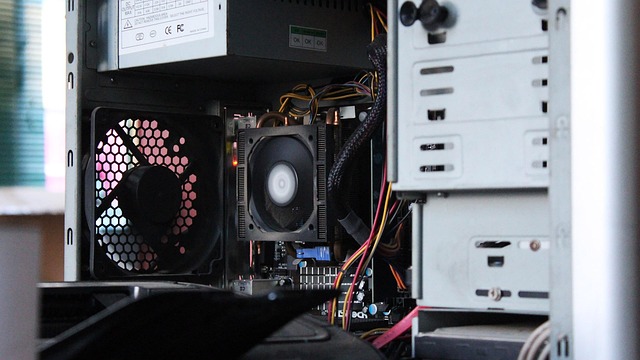
Micro ATX vs Mini ITX: Key Differences in Detail
When comparing micro ATX vs mini ITX directly, several key differences emerge that are crucial for PC builders.
Size and Case Compatibility
The most obvious difference is size. Mini ITX’s 17x17cm footprint allows it to fit into the smallest PC cases, often marketed as SFF cases. These cases can be incredibly compact, sometimes no larger than a large book. Micro ATX, at up to 24.4×24.4cm, requires a slightly larger case, though still considerably smaller than a standard ATX mid-tower. Many cases are designed to accommodate both mATX and Mini ITX boards, offering flexibility.
Expansion Slots (PCIe)
This is a major differentiator. Mini ITX motherboards almost universally feature only one PCIe x16 slot, intended for a graphics card. Some rare models might include a smaller PCIe x1 slot, but this is uncommon. Micro ATX boards typically offer two or three PCIe slots, usually including one x16 slot for a GPU and one or two smaller x1 or x4 slots. Micro atx vs mini itx allows for adding components like sound cards, Wi-Fi cards, or dedicated capture cards alongside the GPU.
If your plan involves a high-end graphics card and a separate sound card for audiophile-grade audio, Micro ATX is likely your only viable option. A Mini ITX build would force you to rely on the motherboard’s integrated audio or a USB audio solution.
RAM Slots
Most Mini ITX motherboards come with two RAM slots, supporting up to a certain maximum capacity depending on the chipset and RAM type. Micro ATX boards often feature four RAM slots, allowing for higher total memory capacity and potentially dual-channel configurations that offer better performance. As of May 2026, 32GB per slot is common for DDR5, meaning a 2-slot Mini ITX board can support up to 64GB, while a 4-slot Micro ATX board can go up to 128GB.
Connectivity and Features
While manufacturers are adept at packing features onto smaller boards, Mini ITX motherboards generally have fewer USB ports, fewer SATA ports for storage drives, and fewer fan headers compared to their Micro ATX counterparts. This is a direct consequence of limited PCB space. Micro ATX boards offer a bit more breathing room, allowing for more onboard ports and headers.
Cooling and Airflow
Smaller form factors can present cooling challenges. Mini ITX builds, especially in very compact cases, often have less room for large CPU coolers and fewer fan mounts, which can restrict airflow. This necessitates careful component selection and potentially more advanced cooling solutions like AIO coolers or custom water loops if high-performance parts are used. Micro ATX cases generally offer better airflow potential due to their larger size and more fan mounting options.

Choosing the Right Form Factor for Your Build
The decision between Micro ATX and Mini ITX boils down to your priorities:
Choose Mini ITX if:
- Your absolute top priority is the smallest possible PC footprint.
- You only need one graphics card and no other expansion cards.
- You’re building a dedicated HTPC, a travel PC, or a minimalist desktop.
- You are comfortable with potentially more complex cable management and cooling solutions in a tight space.
Choose Micro ATX if:
- You want a compact PC that’s smaller than a standard tower but offers more flexibility than Mini ITX.
- You plan to use more than one expansion card (e.g., GPU + sound card, Wi-Fi card).
- You need more RAM capacity or more storage drive connections.
- You are building a budget-conscious PC that still needs good performance and expandability.
Practical Tip: For most users looking to build a capable, space-saving gaming or general-purpose PC in 2026, Micro ATX often strikes the best balance between size, cost, and expandability. Mini ITX is for enthusiasts who truly prioritize extreme compactness above all else.
Common Mistakes to Avoid
When navigating the micro ATX vs mini ITX decision, builders often make a few common errors:
- Ignoring Case Compatibility: Assuming any small case will fit any small motherboard. Always verify the case supports the specific motherboard form factor and its dimensions.
- Underestimating Expansion Needs: Opting for Mini ITX to save space, only to realize later that you need an extra PCIe slot for a crucial component. Plan your future needs.
- Overlooking Cooling: Cramming high-end, heat-generating components into a tiny Mini ITX case without adequate cooling solutions. This can lead to thermal throttling and reduced component lifespan. According to a study by Tech Review Hub (2025), thermal throttling can reduce CPU performance by up to 30% in poorly cooled SFF builds.
- Budgeting Misconceptions: Believing Mini ITX builds are always cheaper. While the motherboard might be comparable, specialized Mini ITX cases and cooling solutions can often be more expensive than their Micro ATX or ATX counterparts.
Expert Insights and Trends for 2026
As of May 2026, the trend towards smaller, more powerful PCs continues. Mini ITX motherboards are seeing increased integration of advanced features, with some models now offering Wi-Fi 7 and improved VRMs (Voltage Regulator Modules) to handle more powerful CPUs. Manufacturers are also innovating with cases, offering more diverse layouts and better airflow solutions for SFF builds.
However, Micro ATX remains a strong contender for builders seeking a practical middle ground. It offers better value for money in terms of features per dollar and often provides a more straightforward building experience than ultra-compact Mini ITX systems. The availability of strong Micro ATX cases that can still fit on a desk without dominating the space keeps it highly relevant.
For those considering future upgrades, Micro ATX typically offers more headroom. The ability to add a second expansion card or more RAM can extend the useful life of a build. While Mini ITX has its dedicated enthusiasts, Micro ATX serves a broader audience looking for a smart compromise.
Frequently Asked Questions
What is the main difference between Micro ATX and Mini ITX?
The primary difference lies in their physical size. Mini ITX is a 17x17cm square, while Micro ATX can be up to 24.4×24.4cm, making Micro ATX significantly larger and offering more expansion slots.
Can I put a Micro ATX motherboard in a Mini ITX case?
Generally, no. Mini ITX cases are designed for the smaller 17x17cm board. While some larger mate-compatible cases can house Mini ITX boards, the reverse is rarely possible due to mounting points and internal dimensions.
Which is better for gaming, Micro ATX or Mini ITX?
Both can be used for gaming. Mini ITX is ideal for compact gaming PCs where space is a priority, but expansion is limited. Micro ATX offers a better balance for gaming builds needing more expansion slots for components like sound or capture cards, alongside the GPU.
How many RAM slots does a Mini ITX board typically have?
Most Mini ITX motherboards come with two RAM slots. Some specialized boards might have fewer, but two is the standard for this form factor.
Does Mini ITX have fewer features than Micro ATX?
Typically, yes. Due to space constraints, Mini ITX boards usually have fewer USB ports, SATA ports, fan headers, and other onboard connectors compared to Micro ATX boards.
Is a Micro ATX build more expensive than a Mini ITX build?
Not necessarily. While the motherboards themselves can be similarly priced, the specialized, compact Mini ITX cases and cooling solutions can drive up the overall cost of a Mini ITX build compared to a more standard Micro ATX setup.
Last reviewed: May 2026. Information current as of publication; pricing and product details may change.
Related Articles
- Google Pixel Update: What's New and How to Use It in May 2026
- Delight Miss: What Really Works
- Android 15 Satellite Messaging: Your 2026 Guide to Off-Grid
Editorial Note: This article was researched and written by the Novel Tech Services editorial team. We fact-check our content and update it regularly. For questions or corrections, contact us. Knowing how to address micro atx vs mini itx early makes the rest of your plan easier to keep on track.